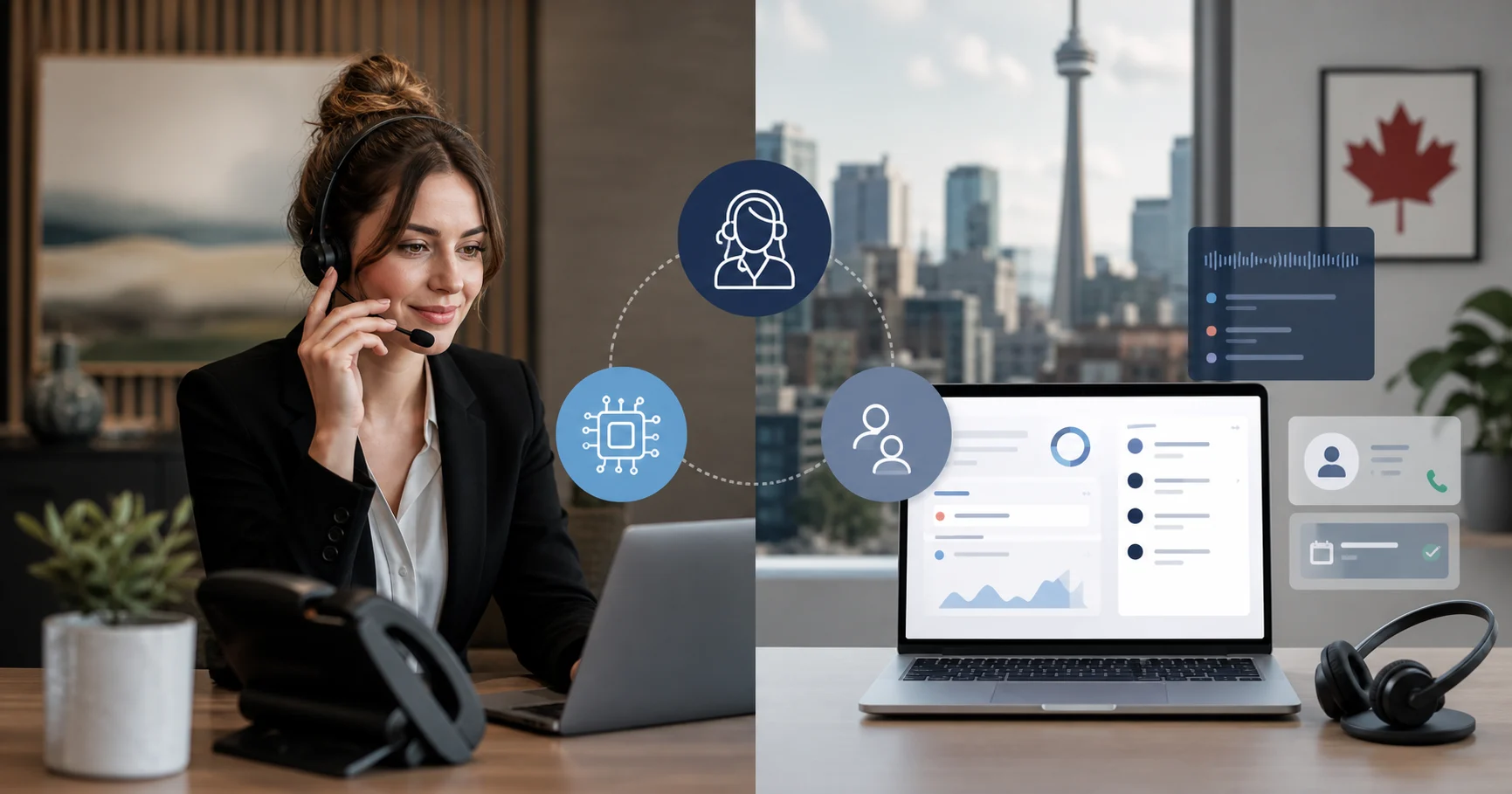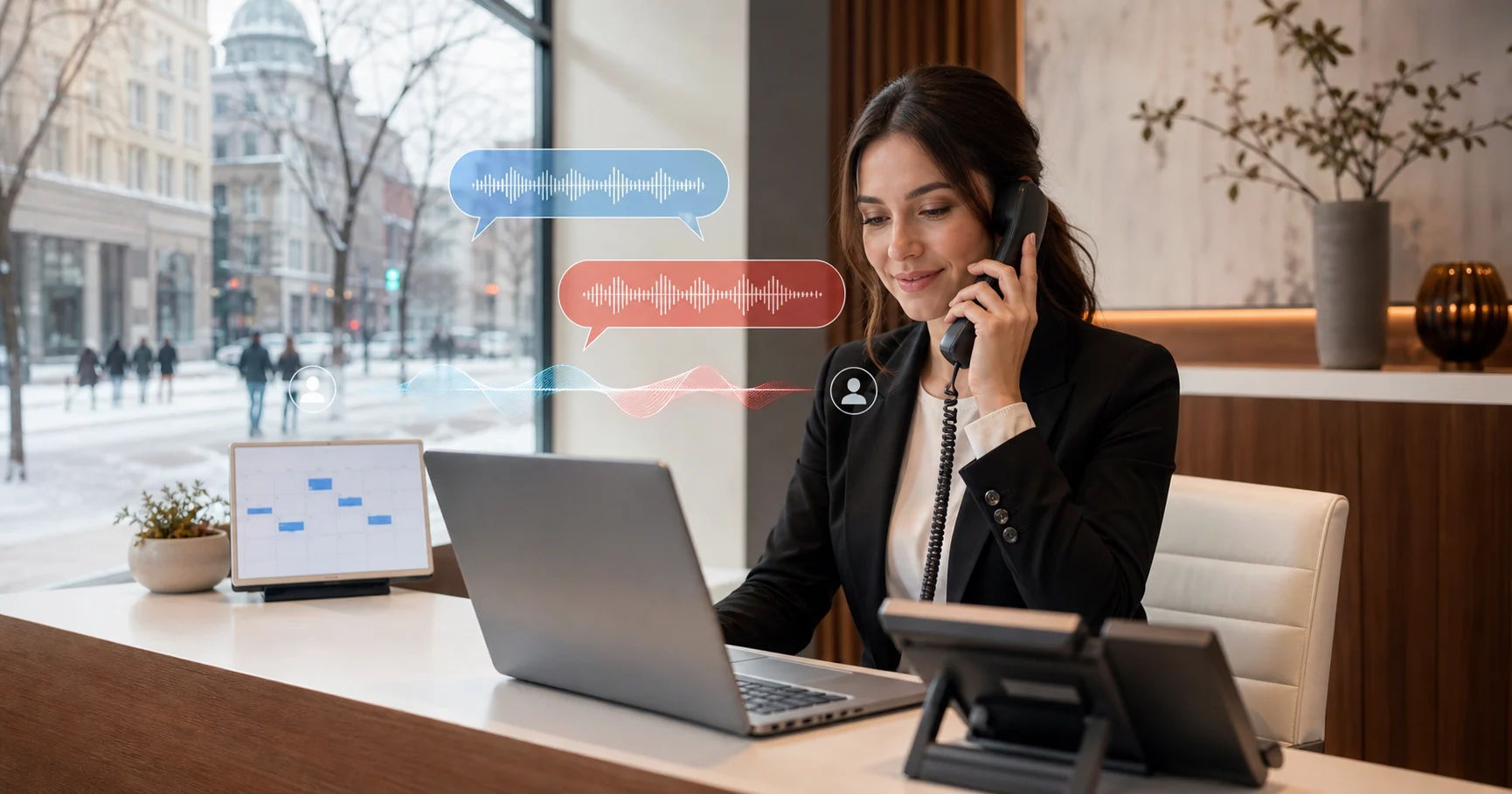
A bilingual AI receptionist is not just an English receptionist with a translated greeting. For Canadian businesses, especially those serving Quebec, New Brunswick, Ottawa, Gatineau, Moncton, or bilingual neighbourhoods, the caller experience needs to work in both languages from start to finish.
That means the AI should answer, understand, book, route, text, and summarize in the language the caller actually uses.
This guide explains what to test before choosing a bilingual AI receptionist in Canada.
What bilingual should mean
At minimum, bilingual AI reception should include:
- English and French greetings
- French understanding beyond simple menu prompts
- Natural French voice quality
- Booking and rescheduling in French
- SMS confirmations in the right language
- Staff routing based on language preference
- Call summaries your team can review
If the AI can say “Bonjour” but then falls back to English, it is not ready for bilingual customer service.
Why Canadian French matters
French callers in Quebec do not necessarily want generic international French. Accent, pacing, vocabulary, and local expectations matter.
Dialbox supports Canadian French voice options modelled on Quebec accents. That matters when the receptionist represents your business on the first call.
The difference is not cosmetic. A caller who hears a voice that fits their market is more likely to stay on the line, ask the real question, and complete the next step.
Where bilingual calls break down
Many businesses discover the problem only after listening to calls. The greeting may be bilingual, but the workflow underneath is not.
Common failures include:
- The caller starts in French and the system answers in English.
- The AI understands simple words but fails on appointment details.
- SMS confirmations are sent in the wrong language.
- Staff receive summaries without language context.
- The AI cannot handle a caller who switches languages.
- The voice sounds translated rather than local.
- The system does not save language preference for next time.
Each failure adds friction. A caller may not complain. They may simply hang up and call someone else.
Language preference should become part of the customer record
Bilingual support works best when the system remembers the caller’s preferred language. That way the next interaction starts from context instead of making the customer repeat themselves.
For Canadian businesses, language preference can affect:
- Greeting language
- Voice selection
- SMS confirmation language
- Staff handoff
- Appointment notes
- Follow-up instructions
- Future routing
Dialbox saves detected language to the contact record, which helps future calls and follow-up feel less generic.
What the caller should experience
A strong bilingual call should feel simple:
- The caller speaks naturally in English or French.
- The receptionist responds in the same language.
- The caller can ask a real question, not just choose a menu option.
- Booking, routing, and SMS follow-up happen in the right language.
- Staff receive the call summary with language context.
The caller should not need to know how your phone system works. They should not have to repeat the same details in English after explaining them in French. They should not receive a follow-up message in the wrong language.
This is why bilingual reception needs to cover the entire workflow, not only the greeting.
Where bilingual reception creates revenue
Appointment-heavy businesses
Clinics, salons, spas, wellness practices, and professional services lose revenue when French-speaking callers cannot book easily. A bilingual AI receptionist can answer common questions, check availability, book the appointment, and send confirmation details.
Service businesses
Trades, repair teams, and local services often receive urgent calls outside office hours. If a caller describes the issue in French, the AI needs to understand enough to route the call properly.
Multi-location teams
Businesses operating across provinces need consistent caller handling without depending on which staff member is available.
Industry examples
Dental and medical-adjacent clinics
Clinics need callers to book, reschedule, confirm location, ask about preparation, and understand next steps. If a French-speaking caller cannot complete booking in their language, the clinic may lose the appointment before staff ever see the missed call.
An AI receptionist should collect the practical details and avoid giving medical advice. It should route clinical questions to staff.
Legal and professional services
Law firms, notaries, accountants, and advisors need careful intake. The AI can capture names, contact details, language preference, matter type, urgency, and preferred callback time.
It should not provide legal, tax, or financial advice. A useful bilingual receptionist knows when to take intake and when to hand off.
Home services and trades
Trades and repair businesses need location, urgency, service type, and scheduling availability. A French caller with an urgent plumbing or HVAC issue should not have to switch languages to explain the problem.
The AI should gather enough detail to route the call or book the right next step.
Salons, spas, and wellness practices
These businesses rely on repeat bookings and clear appointment instructions. Bilingual support can help callers book a service, choose a practitioner, ask about location, and receive confirmation in the right language.
What to test during a trial
Do not buy on a language checkbox. Run real calls.
Test these scenarios:
- A French caller asking for hours and location
- A French caller booking an appointment
- A bilingual caller switching languages mid-call
- A caller asking for a specific staff member
- An urgent request that should transfer
- A question the AI should not answer
- An SMS confirmation after the call
Then review the transcript and summary. Did the language get captured correctly? Did the appointment record make sense? Did the staff handoff preserve context?
How to write bilingual business knowledge
The AI can only answer well if your business knowledge is clear. Do not rely on literal translation alone.
Prepare:
- English and French business names if you use both
- Service names in both languages
- Location and parking instructions in both languages
- Booking rules and cancellation rules
- Staff names and language capabilities
- Service areas
- Words callers commonly use for your services
- Phrases the AI should avoid
If your team uses different words in Quebec than in other markets, include that. Local language creates confidence.
Common bilingual setup mistakes
Avoid these mistakes:
- Translating service names literally when customers use another phrase.
- Forgetting to translate cancellation or preparation instructions.
- Sending English SMS confirmations after a French call.
- Routing all French calls to one person even when that person is unavailable.
- Assuming bilingual support is only needed during business hours.
- Testing the voice but not testing booking.
These are small details, but they shape whether callers trust the system.
Should the AI ask for language choice?
Sometimes yes. Sometimes no.
If your caller base is evenly bilingual, an opening like “How can I help you today?” may be enough if the AI can detect language quickly. If you receive many calls in both English and French, an explicit bilingual greeting may help.
What matters is speed. Do not make callers sit through a long language menu. The AI should identify the language and get to the reason for the call.
Privacy and consent
Bilingual support does not remove privacy obligations. Canadian businesses should still confirm:
- Recording disclosure
- AI disclosure preferences
- Staff access controls
- Deletion controls
- Data processing terms
- Whether customer conversations are used to train AI models
Dialbox is built for PIPEDA-conscious workflows with encryption, access controls, consent-aware messaging, deletion controls, and no customer conversation training.
Staff handoff in bilingual markets
Bilingual AI reception is not only about the caller. Staff need the right context too.
A useful handoff should include:
- Caller name and phone number
- Preferred language
- Reason for call
- Urgency
- Appointment request or service type
- Summary in a language staff can use
- Any promise made to the caller
If only one person on your team speaks French, routing rules should reflect that. If several staff members do, the AI should use your normal business rules to decide who gets the call.
Bilingual reception is more than voice
A strong bilingual setup connects the whole workflow:
| Workflow | What to check |
|---|---|
| Greeting | Can it open naturally in English or French? |
| FAQ | Can it answer your real service questions? |
| Booking | Can it offer and confirm a time? |
| SMS | Can it send useful follow-up in the right language? |
| Routing | Can it transfer to the right person or department? |
| Customer history | Is language preference saved for next time? |
Dialbox saves detected language to the contact record, so future interactions can use the right voice and greeting.
Who needs bilingual AI reception first?
Prioritize it if:
- You serve Quebec customers
- You operate in bilingual markets
- You receive calls from francophone customers today
- Staff are not always available in both languages
- Missed calls turn into lost bookings
- You want consistent after-hours coverage
If you only receive an occasional French call, bilingual support is still useful. But if French callers are part of your market, it becomes core front-office infrastructure.
Bottom line
A bilingual AI receptionist should not make callers work harder because of their language. It should answer, book, route, text, and summarize in the language they use.
For Canadian businesses, test the full call flow in French before choosing a provider. Start with AI phone answering service Canada, compare virtual receptionist features, and review pricing. Dialbox offers a 7-day trial with a credit card required.